

When you’re a busy parent on a budget, online shopping feels like magic – groceries, school snacks, and birthday gifts all done without leaving the sofa. But that convenience comes with a cost – more production, shipping, packaging, and waste.
The good news? You don’t have to be perfect. Small, simple changes to how you shop online can make a real difference – and often save you time and money. Here are practical, parent-friendly ways to shop more sustainably today.
1. Buy Less
Before you click “buy,” pause. If it’s not needed, don’t add it to the cart.
Easy Action: Wait 24 hours before buying non-essentials to avoid impulse buys and save money.
- Take 24 hours before buying non-essentials and ask: “Do we actually need this?”
- Borrow from friends/family for single-use items (party gear, tools).
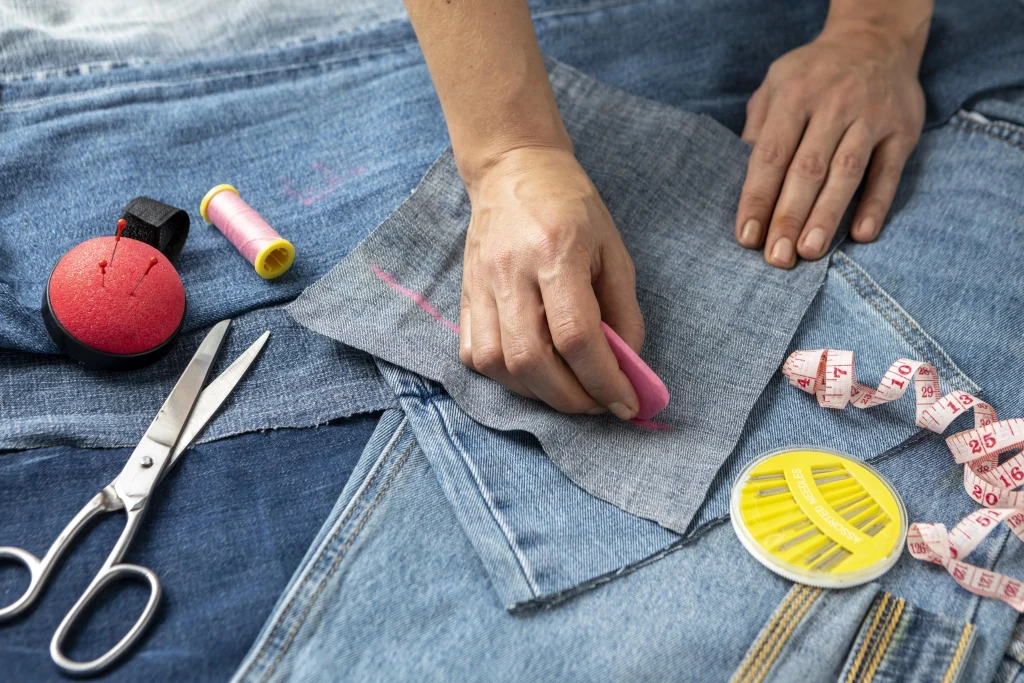
- Fix before replacing-small tailoring or repair is often cheaper than new.
Fewer purchases means less production, shipping, and waste ending up in landfill or oceans.
Last month, I took a pair of old jeans to a local tailor instead of replacing them. I dropped them off on my way to work and picked them up on the way home – £15 later, they were good as new. No waste, no guilt, and no new purchase needed. It felt great to save money and keep something I love in use.
2. Buy Second-Hand
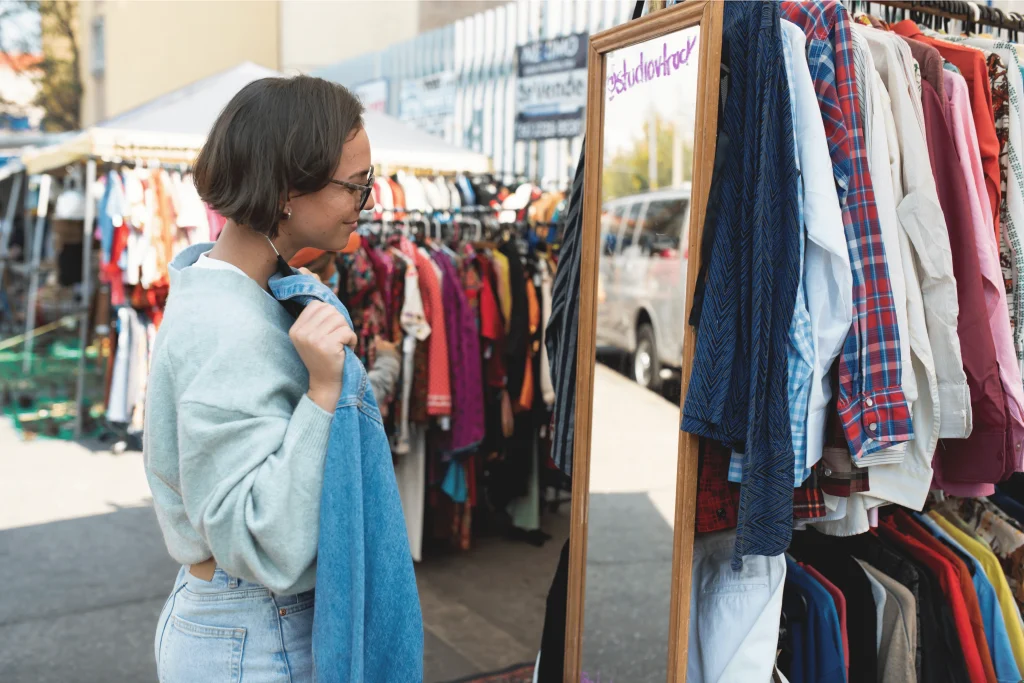
Kids outgrow things fast – second-hand is perfect.
Easy Action: Check Vinted or Facebook Marketplace first – often you’ll find like-new items for a fraction of the price.
To shop second-hand safely:
- Search for the item + “like new” / “barely used” on Vinted, eBay, or Facebook Marketplace.
- Ask for measurements/photos and check seller ratings.
- Use platform payments and read return/refund rules.
- Meet in public for local pick-ups
- Shop pre-loved clothes through Vinted, Depop, eBay, Thrift+, or brand-specific pre-owned (Patagonia Worn Wear, The North Face Renewed)
- For second-hand toys, books, and kids’ items, try Olio, Facebook Marketplace, Gumtree, World of Books, eBay, Oxfam
- Refurbish or source second-hand furniture via Gumtree, Freecycle, eBay, Facebook Marketplace, Olio, British Heart Foundation Furniture Stores, Preloved
- Give electronics a second life through Back Market, Reboxed, Curry’s Refurbished, CEX, eBay, Facebook Marketplace, Music Magpie
- Second-hand outdoor and sports gear can be found on Facebook Marketplace, Decathlon Second Life, Gumtree, eBay
Buying second-hand items keeps them out of landfill and reduces demand for new production.
I recently found an ottoman bed on Gumtree for under £30-the same one sells new for £200+. With a quick clean, it felt brand new. One small swap saved money, waste, and the energy it would’ve taken to make another.
3. Buy Smart
Cheap items often need replacing. One better pair of shoes or a durable backpack will outlast several cheap ones.
Easy Action: Read long-term reviews (6+ months) before buying; check for warranties.
- Read reviews focusing on build quality and longevity.
- Check for quality materials:
- Clothes: Heavy cotton, wool, leather, merino
- Furniture: Solid wood, metal (skip particle board)
- Kitchen/Tools: Cast iron, stainless steel, high-grade plastics
One durable item replaces several cheap ones, which means less waste, fewer resources used, longer-lasting impact, and money saved.
4. Buy from Sustainable Brands – Look Beyond the Label
Not every “green” badge is equal. Look for real transparency: traceable materials, repair programs, take-back schemes, and third-party certifications (B Corp, GOTS, Fairtrade).
Easy Action: Check product pages for traceability info; serious brands share where and how things are made.
- Look for sustainability pages on the brand site.
- Check for certifications: B Corp, Fairtrade, GOTS, Cradle to Cradle.
- Prefer brands with take-back or repair programs.
- Before buying, check ethical directories like Good On You, DoneGood, Ethical Brand Directory, Planted Directory, Green Providers Directory
- Look for certifications like B Corp, Fairtrade, GOTS, Cradle to Cradle to ensure responsible practices.
Sustainable brands use eco-friendly materials and ethical practices, reducing their impact on the environment.

5. Turn Everyday Shopping into Environmental Projects with Riki
If you want to help the environment but don’t have time or money for big lifestyle changes, let your everyday shopping do the work. Riki is a free platform that helps you support impactful environmental projects every time you shop online – with no extra cost.
How it works: Brands pay Riki when you shop. Riki channels that money into initiatives like renewable energy, rewilding, food-waste reduction, and more. You shop as usual – Riki does the rest
Easy Action: Start your next grocery or gift shop through Riki.earth and create positive environmental impact – at zero extra cost.
How to start:
- Sign up for free at Riki.earth.
- Shop at your favourite stores using Riki links.
- Track your personal impact on your dashboard.
Every purchase you make drives real-world environmental impact – without lifestyle changes or extra spending.

6. Be Packaging & Delivery Conscious
Reduce waste and emissions without much effort.
Easy Action: Order only what you need; returns often go to landfill
- Order in bulk to limit packaging and emissions.
- Choose slower delivery options when available.
- Pick minimal or plastic-free packaging.
- Avoid ordering multiple sizes “just in case” – returns generate extra emissions and often end up in landfill.
- Recycle or reuse packaging.
Pro tip: Reuse packaging for shipping your own items. Fewer returns and less packaging means a lot less transport, waste, and emissions.
7. Choose Sustainable Products & Swaps
Pick items that last, are repairable, or refillable.
Easy Action: Replace one disposable item this month with a durable, repairable alternative.
Here are some parent-friendly Swaps:
- Clingfilm → Beeswax wraps
- Disposable water bottles → Reusable insulated bottles
- Paper towels → Reusable unpaper towels or Swedish dishcloths
- Chemical-heavy cleaners → Concentrated refills or DIY
- Gadgets → Refurbished or extend life with parts
- Plastic batteries → Rechargeable NiMH batteries
- Chemical‑filled cosmetics → Solid bars (shampoo/soap) or brands with refill programs
- Gift wrap → Reusable fabric wrap (furoshiki) or recycled and recyclable paper
- Choose natural, low-impact materials: Organic cotton, recycled polyester, bamboo, FSC wood, stainless steel
- Look for credible certifications: GOTS, Fairtrade, B Corp, FSC, ENERGY STAR
- Buy durable, repairable, refillable items
- Shop second-hand or local
- Avoid greenwashing: Look for proof, not vague claims
- Pick minimal, recyclable packaging
- Check brand transparency (supply chain, labor)
- Close the loop: Take-back, recycling, compostable options
- Use smart shopping tools: Good On You, DoneGood
Environmentally-friendly items reduce emissions, pollution, and waste while fitting into modern life.
8. Tell Brands What You Want – Your Voice Matters
Email a favourite brand and say you want sustainable options. Friendly feedback really does shape what companies do.
Easy Action: Send the template below to one brand you buy from.
Hi [Brand],
I love your products and would love to see more sustainable options. Could you consider:
- Using recycled or lower-impact materials
- Reducing or switching to recyclable/compostable packaging
- Offering repair, refill, or take-back programs
I’d be happy to support your brand more if these options were available.
Thanks!
Best,
[Your Name]
Sending this email to brands signals consumer demand and encourages companies to produce responsibly.
3 Quick Wins Today
- Swap clingfilm for beeswax wraps.
- Start your next shop on Riki.earth.
- Email one brand asking for sustainable options.
3 Things to Stop Now:
- Buying cheap disposable items.
- Returning multiple sizes “just in case.”
- Throwing away packaging-reuse or recycle.
3 Habits to Build:
- Buy less
- Buy second-hand
- Buy durable
Need a hand? Send us an email at hello@riki.earth – we’re happy to help.

Frequently Asked Questions
Riki is a platform that turns your online shopping into support for environmental projects – at no extra cost. Retailers pay Riki a commission for referrals, and we use that money to support initiatives like renewable energy, conservation, rewilding, and reducing food waste.
Projects include renewable energy, conservation and rewilding, reducing food waste, supporting regenerative agriculture, and other impactful initiatives.
1. Riki partners with brands and retailers.
2. They give us a link to their website.
3. You click the link and shop as normal – no extra cost.
4. The brand pays Riki for sending them a customer.
5. We channel that money into environmental projects.
6. Your personal dashboard shows the impact you helped create.
Brands and retailers pay Riki a commission for sending customers. That commission funds environmental projects, so your shopping creates impact at no extra cost.
Not at all. Shop as you normally would, and your purchases automatically create environmental impact.
Sign up at Riki.earth (it’s free), start shopping through our links, and track your impact on your dashboard.
Support Environmental Projects While Shopping Online. No Extra Cost.
